
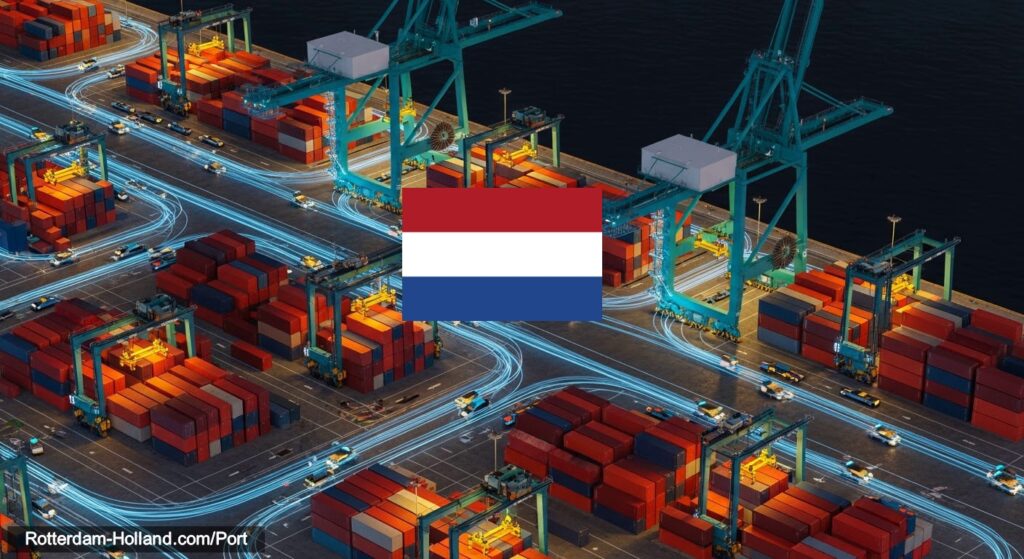
Rotterdam does not do subtle, and its port definitely does not do nostalgia. At Maasvlakte II, the future of global trade is already running on code, electricity, and a quiet kind of ruthlessness that most cities would rather not admit out loud. This is the fully automated Port of Rotterdam, where containers move without drivers, cranes think for themselves, and efficiency has become the only language that matters. It looks like progress, it feels like science fiction, and yet it raises an uncomfortable question that refuses to go away. What happens to a city when its most powerful industry no longer needs its people?
The Future of Logistics in The Netherlands
There is something deeply unsettling about standing near Maasvlakte II and realizing that one of the most important gateways of Europe no longer needs people to function. The cranes move, the containers glide, the ships are emptied with surgical precision, yet the human presence feels like an afterthought. Rotterdam has always been proud of its efficiency, its obsession with control, its ability to turn chaos into order. Now it has taken that obsession to its logical conclusion. A port that works perfectly, silently, almost beautifully, and yet feels like a place where humanity has been edited out of the picture.
Maasvlakte II Feels Like a Ghost City Built for Machines
The first thing that hits you is not the scale, because Rotterdam has always been massive. It is the silence. No shouting dockworkers, no engines roaring in chaos, no visible struggle. Just a quiet, almost eerie choreography of automated machines doing their job without complaint. It looks impressive until you realize that this silence is not peace, it is absence. The kind of absence that makes you wonder what was here before and why it had to disappear. This is not just innovation. This is replacement dressed up as progress.
The Algorithm Has Replaced Human Instinct
Rotterdam did not just automate labor. It replaced human decision making with code. The terminal operates on a central system that calculates everything in real time, from ship arrivals to container positioning. Where a human once relied on experience and instinct, the algorithm now predicts, adjusts, and optimizes. It does not get tired. It does not hesitate. It does not care. And that last part is where things get interesting, because efficiency without empathy is great for business but questionable for everything else that makes a society feel human.
Efficiency Is King and Humans Were the First Casualty
The selling point is simple. Remove human error, remove delays, remove inefficiency. The result is a terminal that runs twenty four hours a day without friction. It is a dream for logistics companies and a nightmare for anyone who believed hard work guaranteed relevance. Rotterdam has always been brutally honest in its priorities. If something can be done faster and cheaper, it will be. The automated port is not a betrayal of that mindset. It is the purest expression of it. The uncomfortable truth is that humans were never the end goal. Efficiency was.
The Zero Emission Narrative Sounds Cleaner Than It Really Is
The port proudly presents itself as a zero emission operation, powered by electricity, supported by hydrogen systems, and aligned with environmental goals. On paper, it looks like a victory for sustainability. In reality, it is more complicated. The terminal itself may be clean, but the global system it feeds is anything but. Ships still burn fuel, supply chains still stretch across continents, and consumption continues to grow. Rotterdam has cleaned its own house, but it is still part of a neighborhood that runs on pollution. It is progress, but it is also branding.
The Dockworker Did Not Disappear He Was Replaced Quietly
There is a polite narrative that workers have simply transitioned into higher skilled roles. Some have, of course. But not everyone becomes a software technician or a systems engineer overnight. The romantic image of the dockworker, tough, physical, deeply connected to the rhythm of the port, does not fit into this new world. That identity has been phased out, not celebrated. What you are left with is a workforce that is smaller, more specialized, and less visible. The port did not just automate tasks. It reshaped who gets to belong there.
Rotterdam Shows the World What Efficiency Really Looks Like
Other ports are watching closely. Rotterdam is not just experimenting. It is setting a standard. The message is clear. If you want to compete, you automate. If you hesitate, you fall behind. This creates a ripple effect across global logistics, pushing the entire industry toward the same model. It is impressive in a cold, calculated way. The city that rebuilt itself after destruction is now rebuilding the idea of labor itself. Rotterdam does not wait for the future. It forces it into existence whether people are ready or not.
A Perfect System Is Also a Fragile One
There is a quiet risk hiding behind all this precision. When everything depends on systems, those systems become a single point of failure. A technical glitch, a cyber attack, or a miscalculation can disrupt operations at a scale that human systems never could. Efficiency removes redundancy, and redundancy is often what keeps things resilient. The more perfect the system becomes, the less room there is for error. And when something finally does go wrong, it will not fail slowly. It will collapse quickly and very visibly.
Rotterdam’s Identity Is Changing and Not Everyone Notices
Rotterdam has always been a working city. A place defined by movement, labor, and a certain rough honesty. The automated port challenges that identity. It replaces visible effort with invisible processes. It turns a human story into a technological one. For visitors, it looks futuristic and impressive. For locals who understand what the port used to represent, it feels like something essential is fading. The city is still powerful, still important, but it is becoming something different. Something more distant and harder to recognize.
The Future of Logistics Comes With a Price Nobody Talks About
It is easy to admire what Rotterdam has built. It is efficient, innovative, and undeniably ahead of its time. But it is also a reminder that progress is never neutral. Every gain comes with a trade off, and those trade offs are not always evenly distributed. The automated port is not just a glimpse into the future of logistics. It is a mirror reflecting the choices we make as a society. Do we value efficiency above all else, or do we still make space for the messy, imperfect, human side of work. Rotterdam has already made its decision. The rest of the world is catching up.
Conclusion and Reminder about the Port of Rotterdam
Rotterdam has never asked for permission to reinvent itself, and this automated port proves it again with almost uncomfortable clarity. The machines do not sleep, the system does not hesitate, and the city keeps moving whether people are ready or not. This is what the future of logistics looks like when efficiency becomes a belief system instead of just a goal. It is impressive, a little cold, and impossible to ignore. The Port of Rotterdam has set the tone for what comes next, and the rest of the world will follow, even if it quietly wonders what got lost along the way.