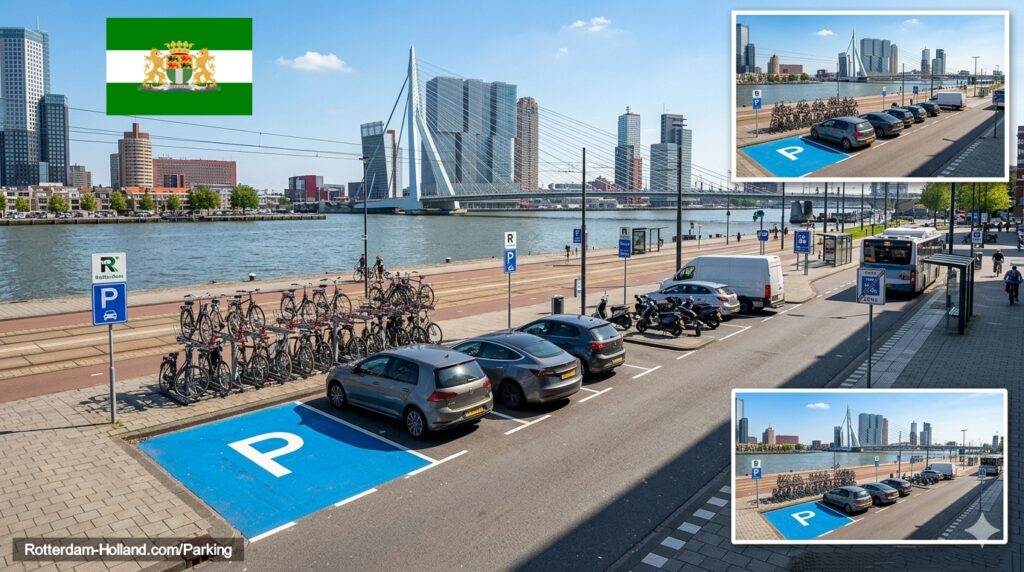
Parking in Rotterdam always feels like a small game I have learned to play well. I read the signs, pick my spots, and time my moves like it matters, because it does. I have seen how quickly a simple mistake turns into an expensive lesson. This city rewards attention and punishes carelessness without hesitation. I no longer fight it. I move with it. Once you understand the rhythm, parking stops being stress and starts making sense. For me, it is one of those quiet systems that reveals how Rotterdam really works beneath the surface.
A Sharp Take on Pricing, Control, and the City’s Obsession with Efficiency.
I live in Rotterdam and I have learned something that still feels absurd every time I say it out loud. In this city, standing still can cost you more than moving. I walk past cars that sit quietly and somehow generate more revenue than buses full of people. I pay for minutes of nothing. I pay for space that does not move. And the city smiles politely while doing it. Rotterdam sells stillness like a luxury product. You think you are parking your car. In reality, the city is renting you a small piece of control.
The Price of a Square Meter in Rotterdam
Space in Rotterdam is not just limited. It is hunted, measured, priced, and squeezed until it confesses its value. I see it every day. A narrow street becomes a battlefield of painted lines and signs. Each spot carries a number that quietly tells you what your presence is worth. The closer I get to the centre, the higher the price climbs. It feels less like parking and more like entering a financial agreement with the city. I stand there, look at the meter, and think about how expensive it is to exist in one place without moving.
My First Real Lesson in Parking Reality
I did not always understand this system. I learned it the painful way, like most people who think they can outsmart a Dutch rule. I parked, I guessed, I walked away with confidence. Then I came back to a fine that felt like a personal message. Rotterdam does not shout. It teaches through consequences. That moment changed how I look at every parking sign. I stopped seeing them as suggestions. I started reading them like contracts. The city had spoken, and it spoke in euros.
Parking Is Not About Cars It Is About Behavior
Rotterdam does not care about your car. It cares about your behavior. Parking rules shape how I move, where I go, and how long I stay. The system trains me without asking for my permission. I adjust my plans based on cost, time, and availability. I become more aware, more calculated, more controlled. That is the real function of parking here. It is not storage. It is discipline. The city uses space to guide people, to prevent chaos before it even begins.
Efficiency Disguised as Freedom
From the outside, Rotterdam feels open and modern. Wide streets, clean lines, a city that looks like it was designed with confidence. But once I deal with parking, I see the other layer. Efficiency. Everything is optimized. Every spot is timed, priced, monitored. It feels like freedom until you try to ignore the rules. Then the system tightens around you. Rotterdam gives you choices, but it also defines them. You can park anywhere, as long as you follow the structure that has already decided your options.
The Quiet Power of Parking Enforcement
I rarely see the people behind the system, but I feel their presence all the time. Enforcement in Rotterdam is silent and efficient. No drama, no shouting, no warning. Just results. I park, I leave, and somewhere in the background, the system checks my license plate. It knows if I paid. It knows if I stayed too long. That quiet control creates order. It also creates tension. I respect it, but I never forget that I am being watched by a system that does not sleep.
When Parking Becomes a Daily Strategy
Parking in Rotterdam is not random for me anymore. It is strategy. I plan ahead. I choose locations carefully. I think about cost before I even start the engine. Sometimes I skip the centre completely because I know what it will cost me to stop. Other times I use alternatives and let the system work for me instead of against me. It sounds extreme, but this is how the city trains you. You either adapt, or you keep paying for your mistakes.
The Illusion of Simplicity
At first glance, parking looks simple. A space, a sign, a payment. But the deeper I go, the more layers I see. Zones, time limits, digital systems, invisible rules that only make sense after you break them once. Rotterdam hides complexity behind clean design. That is part of its charm and its danger. You think you understand it until you do not. And when you do not, it costs you. The system is simple on the surface and strict underneath.
My Relationship With Parking Has Changed
I used to hate parking in this city. Now I respect it. Not because it became easier, but because I finally understand it. I see the logic behind the pricing. I see the reason behind the control. I still think it is expensive. I still feel the pressure. But I also see how it keeps the city functioning. Without it, Rotterdam would collapse into frustration and conflict over space. Parking is not the problem. It is the solution that people complain about.
Rotterdam Sells Order and Calls It Parking
In the end, parking in Rotterdam is not really about where you leave your car. It is about how the city maintains order in a place that never stops moving. I pay for a spot, but what I really buy is structure. I buy predictability. I buy a system that works, even when it feels harsh. Standing still costs money because stillness takes space, and space in Rotterdam is too valuable to waste. Once I accepted that, everything made sense.
My Conclusion and Reminder about Parking Spaces in Rotterdam
Parking in Rotterdam changed how I see space, rules, and everyday life. I no longer take an empty spot for granted. I notice the logic behind every sign, every zone, every quiet restriction. I have learned to slow down, observe, and adapt before I act. This city does not leave room for guesswork. It expects awareness. And once I accepted that, everything became easier. Parking stopped feeling like a battle and started feeling like a system I could work with. For me, it is one of those small daily experiences that quietly explains how Rotterdam keeps itself together.