Rotterdam sells itself to the world as a bicycle paradise where everybody cycles happily through clean streets and modern architecture. The reality feels far stranger. In Rotterdam, bicycles are celebrated while parked bicycles are hunted like urban criminals by municipal enforcement teams driving what locals call the pickup truck of doom. This blog post and YouTube video explores the absurd war on bicycle parking in Rotterdam, the housing crisis forcing residents to store bikes in hallways, Dutch obsession with rules and efficiency, and the paranoia of bicycle theft shaping daily life. Welcome to the Netherlands, where sustainability comes wrapped in warning stickers, bureaucracy, and passive aggressive civic discipline.
How The Pickup Truck Manages Bicycle Parking
Rotterdam loves bicycles the same way strict parents love children. The city encourages them, funds them, celebrates them, and then loses its mind the second they stand in the wrong place for too long. Every politician in Rotterdam talks proudly about sustainability, green transport, and the glorious Dutch cycling culture. Then suddenly your rusty bicycle chained to a railing becomes a threat to civilization itself. Somewhere in a municipal office, a man wearing a reflective jacket probably stared at a map and whispered the Dutch version of “we ride at dawn.” This is the strange contradiction of Rotterdam. The city wants everybody to cycle everywhere, but once your bicycle stops moving, it transforms into urban pollution. Welcome to the modern Dutch paradise where freedom exists only while your wheels are spinning.
The Pickup Truck of Doom Never Sleeps
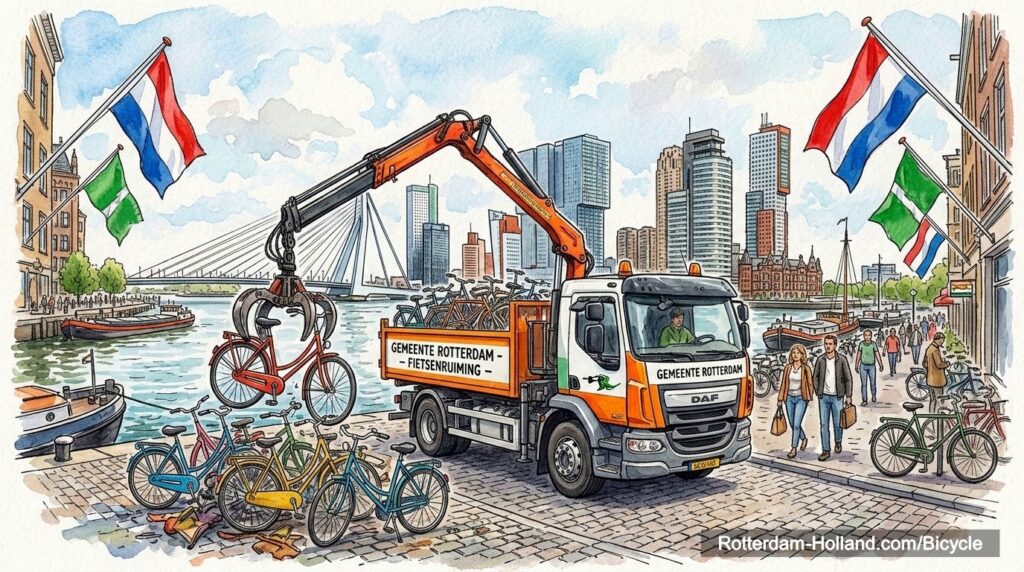
Rotterdam has created one of the most unintentionally funny machines in urban history. Residents call it the pickup truck of doom because the thing moves through neighborhoods like a mechanical predator searching for illegally parked bicycles. Imagine a garbage truck mixed with a prison van and fueled entirely by Dutch irritation. Municipal workers cruise through hotspots looking for bikes chained to poles, fences, trees, and traffic signs. Once they spot one, they slap an orange warning label onto it like a bureaucratic death sentence. The owner gets seven days to move the bicycle before the city returns with bolt cutters and enough civic righteousness to power a small nuclear reactor. Somewhere deep inside Dutch culture lives an uncontrollable obsession with order. Even abandoned bicycles apparently threaten national stability now.
Dutch Cycling Culture Comes With Fine Print
Tourists arrive in Rotterdam thinking Dutch cycling culture feels free and romantic. They imagine canals, freedom, fresh air, and smiling locals casually gliding through life. Then reality punches them in the face like cold North Sea rain. Dutch cycling culture is not freedom. It is highly organized movement supervised by invisible rules and passive aggressive social pressure. Ride your bicycle correctly and society accepts you. Park it incorrectly and suddenly you become public enemy number one. The Netherlands treats bicycles almost like sacred animals while simultaneously punishing their existence when parked badly. This is the same country where people will politely explain sustainability to you while attaching a municipal warning sticker to your handlebars with the emotional warmth of a tax audit.
Rotterdam Has Too Many Bicycles and Too Little Space
Nobody talks honestly about how crowded Dutch cities have become. Rotterdam keeps building apartments while pretending everybody magically has storage space hidden inside the walls. Many residents live in tiny flats where bicycles become part of the furniture. Some people practically sleep beside their bikes like protective medieval guards. Storage rooms are often overcrowded, unsafe, inaccessible, or flooded with abandoned junk from three previous tenants. So people drag bicycles into hallways, staircases, and entrances because they do not trust the city or their neighbors. Then the municipality acts shocked when sidewalks turn into accidental bicycle exhibitions. Rotterdam wants density, sustainability, and endless cycling growth without admitting that the city itself is physically running out of breathing space.
Bicycle Theft Turns Everybody Into a Paranoid Philosopher
Every Rotterdammer knows the emotional pain of bicycle theft. It is basically a local coming of age ritual. Your bike disappears once and suddenly you start behaving like a survivalist preparing for social collapse. People buy three locks for bicycles worth less than dinner at a decent restaurant. Some residents chain bikes to objects that appear structurally important to the survival of the city itself. Others carry bicycles upstairs into tiny apartments because trusting public space feels suicidal. Dutch politicians love talking about cycling numbers, but they rarely mention the underground economy quietly recycling stolen bikes across the country like some weird environmentally friendly criminal ecosystem. In Rotterdam, bicycle ownership is temporary. You never fully own a bike here. You merely babysit it until somebody else decides they need it more.
The Netherlands Loves Rules More Than Oxygen
Dutch society functions because people obey systems with religious dedication. Lines must stay straight. Sidewalks must stay clean. Schedules must stay sacred. A bicycle parked creatively disrupts the spiritual balance of the nation. The pickup truck of doom exists because the Dutch genuinely believe urban order creates moral virtue. This sounds ridiculous until you live here long enough to understand how deep the obsession runs. Rotterdam does not tolerate visual chaos for long. Somebody somewhere always feels compelled to regulate it. A bicycle chained to a tree becomes more than parking. It becomes evidence of disorder. The city responds with orange warning labels, databases, enforcement teams, and confiscation depots because apparently this is what advanced civilization looks like now.
The Confiscation Depot Feels Like Bicycle Purgatory
Confiscated bicycles disappear into municipal storage depots where they wait in silence like forgotten prisoners. Owners often discover their bikes are not stolen after all. The city simply kidnapped them for violating parking etiquette. Imagine calling the municipality in panic only to hear your bicycle has been detained by the government. That sentence alone captures modern Dutch life perfectly. Somewhere behind industrial doors sits an ocean of abandoned bicycles collecting dust while municipal employees process them with all the emotional energy of airport baggage staff. The entire system feels strangely dystopian and strangely efficient at the same time. Rotterdam somehow transformed bicycle parking into a full administrative ecosystem. Humans truly cannot resist turning simple things into paperwork.
Sustainability Looks Different When You Live Here
International media loves presenting Dutch cycling culture as some perfect green utopia. They show smiling commuters and pretty bike lanes without showing the stress underneath the system. Real cycling life in Rotterdam includes rain, theft, overcrowding, broken locks, aggressive delivery riders, endless construction work, and municipal enforcement squads hunting illegally parked bikes. Sustainability here feels less like freedom and more like mandatory participation in a giant urban experiment. You cycle because driving is expensive, parking cars is hell, and public transport keeps becoming more expensive every year. The bicycle becomes less of a lifestyle choice and more of an economic survival tool wrapped in Dutch propaganda about healthy living.
Rotterdam Still Has Its Own Brutal Beauty
Despite all the contradictions, I still love this city. Rotterdam feels honest in a way many polished European cities do not. It shows you the machinery directly. Nothing hides behind fake historical charm here. The port, the cranes, the concrete, the endless bicycles, the rules, the surveillance, the chaos pretending to be order. It all exists in full view. Even the pickup truck of doom somehow becomes part of the city’s personality. A ridiculous symbol of Dutch efficiency colliding with human stubbornness. Rotterdam irritates me daily and fascinates me constantly. That combination creates loyalty stronger than tourist fantasies. This city does not ask you to love it politely. It dares you to survive it first.
In Rotterdam Even a Bicycle Becomes Political
A parked bicycle tells the story of modern Rotterdam better than most politicians ever could. It reveals the housing crisis, urban overcrowding, social control, sustainability propaganda, economic pressure, and Dutch obsession with order all at once. That rusty bike chained illegally beside a metro station is not just transport. It is evidence of people adapting to a city that constantly demands efficiency while becoming harder to live in comfortably. Rotterdam remains one of the most fascinating cities in Europe precisely because of these contradictions. The city sells freedom while regulating movement. It celebrates bicycles while criminalizing where they rest. Somewhere between the bike lanes, warning stickers, and confiscation depots lives the real Rotterdam. Raw, efficient, cynical, funny, exhausted, and still somehow moving forward through the rain.
Conclusion and Reminder about Bicycle Parking in Rotterdam
Rotterdam remains one of the most fascinating and contradictory cities in the Netherlands. In Rotterdam, bicycles represent freedom, sustainability, survival, and social pressure all at the same time. This blog post and YouTube video shows how something as simple as bicycle parking reveals deeper problems inside Dutch urban life, from overcrowded housing and theft anxiety to strict enforcement and obsession with public order. The famous Dutch cycling culture looks beautiful from the outside, but daily reality feels far messier, funnier, and more aggressive. Rotterdam keeps moving forward at full speed, even while the city quietly declares war on the bicycles standing still beside its streets.